2023
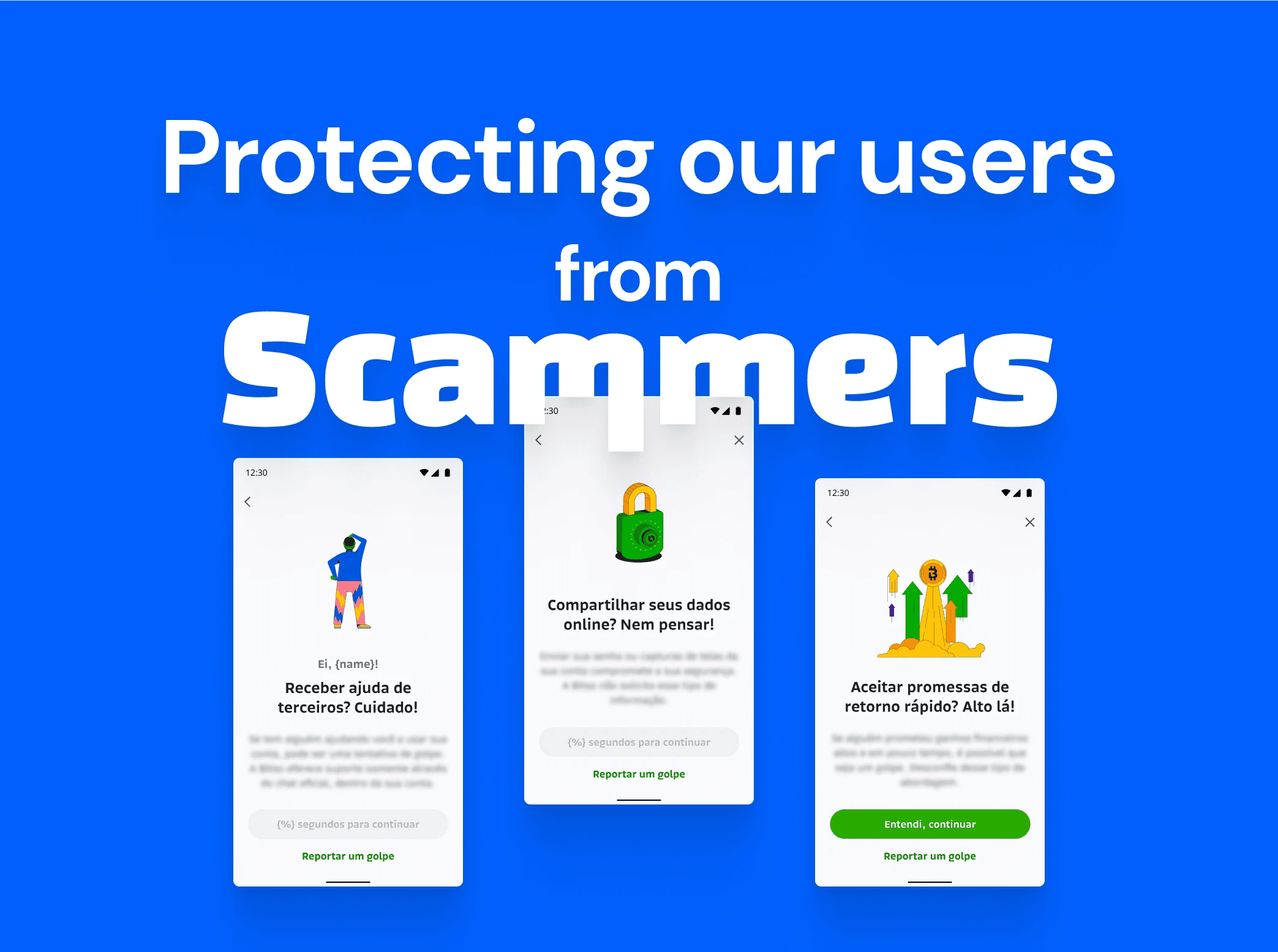
How we used content and a simple interface to reduce scam attacks.
My role
Product Designer
Product team
Product Design
Content Design
Product Manager
Data Science Team
Engineering
THE PROBLEM
Scam-related fraud surged in 2022, causing direct financial losses and reputational risk
Fraudsters were deceiving users through multiple channels, convincing them to send funds. Some victims were existing customers, while others created accounts specifically to complete scam-related transactions.
7.5K Victims (YTD)
$2.8M Fraud losses (USD, user-borne)
86% Victims from Brazil
INITIAL EXPERIMENT
The previous scam warning flow had critical gaps.
Strengths
+Explicitly informed users about scams
+Added "Report a scam" CTA for customer support
Weaknesses
−Users were instructed by scammers to skip warnings
−"Report a scam" redirected to confusing form
−Many users abandoned ticket creation
DISCOVERY AND RESEARCH
Understanding scammer and victim journeys
1. Journey Mapping
Studied scammer and victim journeys and fraud modus operandi. Identified a major pain point: Brazilian users often realized they were being scammed only after approximately 4 withdrawals.
Benchmark Research
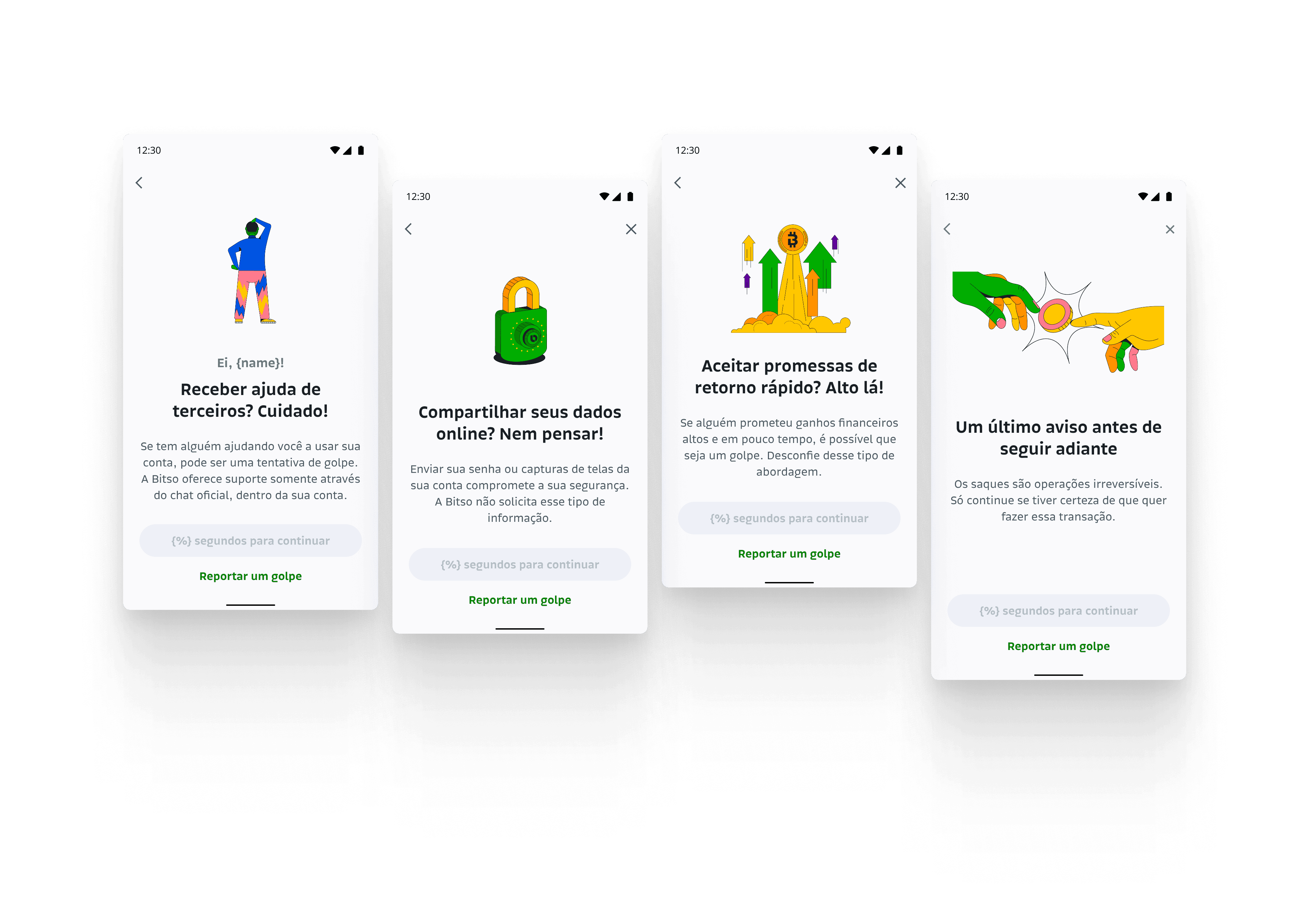
Effective prevention strategies include explaining the irreversible nature of withdrawals, using illustrations and emotional cues, and providing educational materials promoting realistic investment expectations.
Core Insight:
Clever fraudsters + naïve users = the need for smart friction
Solution: Smart Friction
The right amount of friction = security + usability
Too much friction=Frustration and drop-off
Too little friction=Security risk
The right friction=Security + Usability
Success Metrics Tracked
Fraud / scam rate
First crypto withdrawal completion rate
RESULTS
Measurable Impact
Initial Rollout · 7,202 Brazilian Users
−10% Scam-related withdrawals
8% → 6% Scam report rate
Post-Iteration · Chat-Based CTA
−12pp Scam report rate (from 13% → 1%) among first crypto withdrawal users
−73pp Withdrawal completion among users who reported a scam (98% → 25%)
The intervention strongly reduced withdrawals among users at high risk of being scammed, while maintaining a moderate −6.4pp impact on non-scam users (95% → 88%).
QUALITATIVE VALIDATION
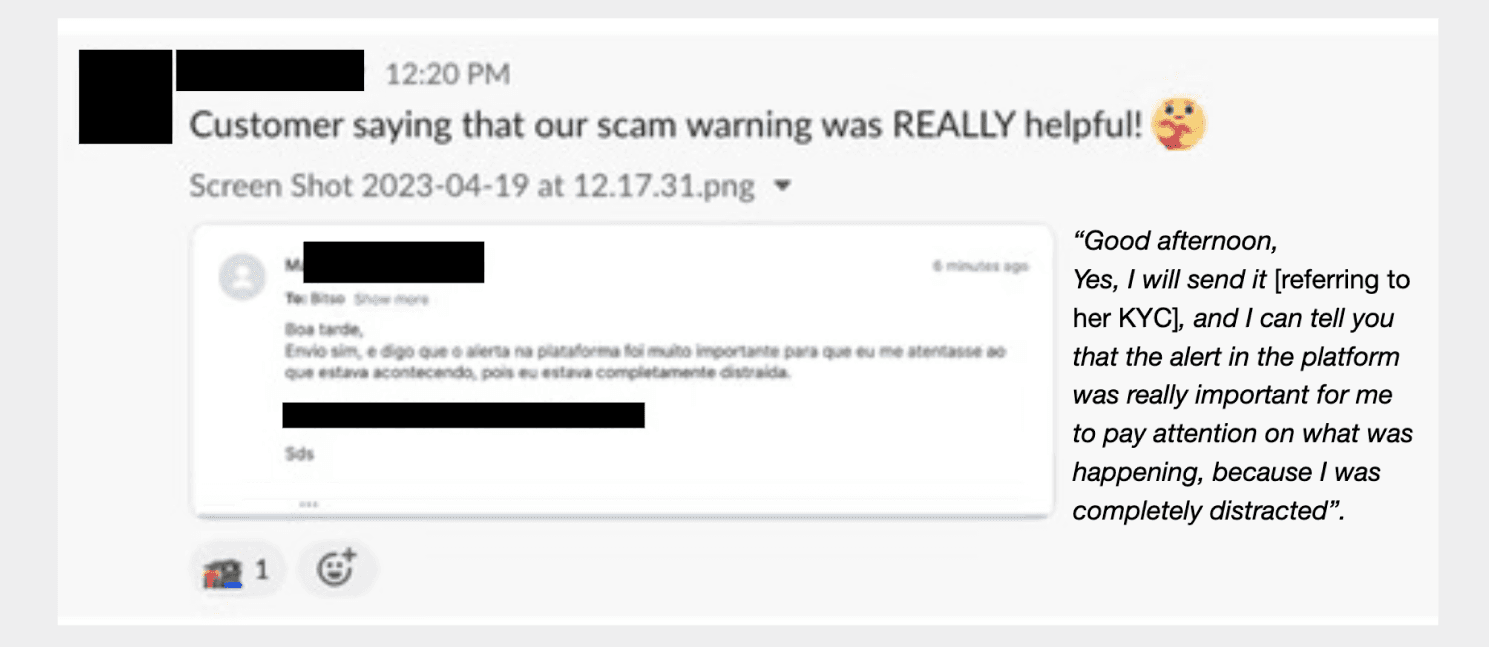
"The alert in the platform was really important for me to pay attention on what was happening, because I was completely distracted."
— Customer feedback
SUPPORT TEAM FEEDBACK
Customers found the scam warning helpful
Users became more aware of suspicious situations
OUTCOME
✓ Reduced scam-related withdrawal activity
✓ Reduced scam report rates
✓ Prevented high-risk transactions
✓ Maintained acceptable withdrawal completion rates
✓ Improved user awareness of scams